
What happens when outdoor cats become indoor cats? Part I
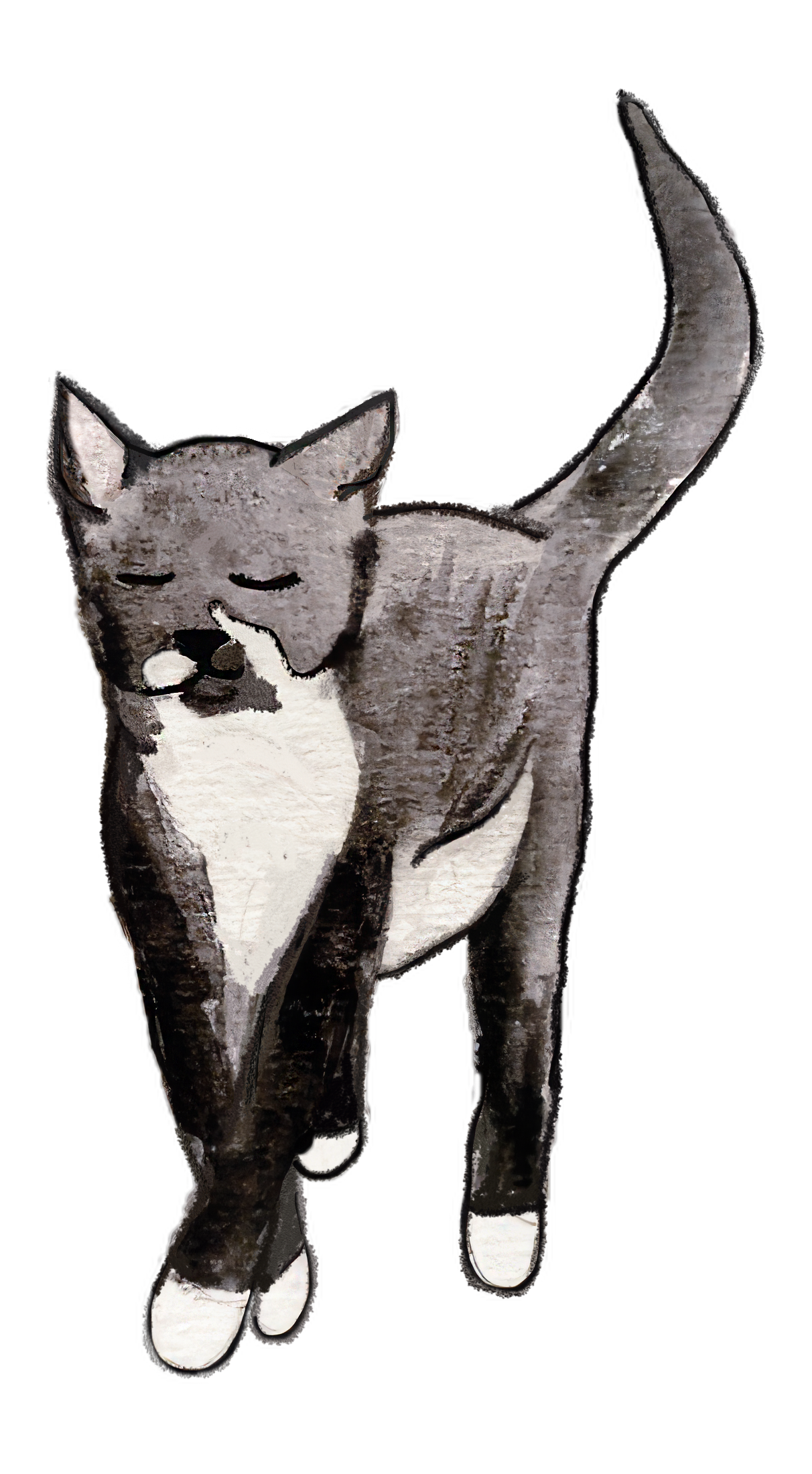
Watercolour by JSL Henning
Recently, I had the pleasure of collaborating with the team at Companion Animals New Zealand on two papers exploring a question that is becoming increasingly relevant as more and more Australian and NZ councils and states move towards mandating cat confinement: What happens when an outdoor cat becomes an indoor one? And how well do they (and their humans) cope with the change?
Using two different study designs, our papers investigated cat and guardian adjustment to an indoor-only lifestyle, revealing some unexpected insights and highlighting the many challenges and benefits of moving outdoor cats indoors.
Part 1: Who let the cats in? Evaluation of the transitioning of cats to indoor life
While previous studies have compared differences between indoor and outdoor cats, none had investigated the actual process of transitioning cats indoors.
In a world first, our study followed sixteen cats and their guardians over four weeks as they transitioned their previously outdoor cat indoors. For the first week, participants kept to their usual routine, allowing their cats outdoor access before bringing (and keeping) their cat indoors for the following three weeks.
Weekly surveys, a daily diary and HeyRex2 activity monitors were used to collect data on cat behaviour and guardian experiences during the transition. A follow up survey then investigated how many participants were still keeping their cats indoors six months after the study.
How the cats adjusted:
Considerable individual variation was observed in how cats adapted to indoor life. While the majority of cats showed minimal behavioural changes and adjusted within a matter of weeks, a minority of cats displayed stress-related behaviours and did not adapt within the 3-week study period.
Although some cats initially showed potential signs of stress such as increased vocalisation and toileting issues, by day 21, 66% of cats were no longer displaying behaviours associated with stress or making any attempts to escape.
Did cat behaviour change indoors?
Cat behaviour changes (as reported by their guardians) included toileting issues, low mood, and increases in sleeping, hiding and vocalising. However, these behaviours decreased after the first week indoors. Positive behaviour changes were also noted, with cats perceived to be more affectionate and spending more time interacting with their guardians.
Interestingly, data from the activity trackers did not find any differences in cat activity patterns before and after confinement, suggesting that, while some behavioural issues developed briefly and resolved in most cases, the cats’ general activity and functioning was unaffected by the move.
Guardians also reported increases in cat scratching of household objects. However, as scratching is a normal cat behaviour, this may simply reflect cat redirection of scratching from a preferred outdoor surface or increased opportunities for guardians to notice the behaviour now the cat was indoors.
How the humans adjusted:
The transition proved more challenging for the cats’ guardians, with many reporting difficulties trying to monitor doorways or prevent escapes, struggling to balance their own thermal comfort with keeping windows closed during a particularly hot summer, and feelings of guilt about restricting their cat indoors. Even when cats adapted well, some guardians found the process ‘somewhat difficult’.
At the end of the study, 40% of participants said they intended to keep their cats indoors. However, six months later, only 23% of cats were still indoors, with most cats regaining outdoor access within a month of the study finishing.
What happened six months later?
Of the 13 participants who completed the six-month follow up survey, only three were still keeping their cats indoors.
Reasons people gave for returning their cat to an outdoor lifestyle included: perceived changes in their cat’s behaviour after the study, struggling to manage the logistics of keeping cats indoors (monitoring doorways, inability to open windows when hot) and feeling that their cat’s past history of outdoor access made it difficult to keep them indoors.
Importantly, whether cats remained indoors was not always based on how well they had adjusted. One cat who had struggled initially was eventually kept indoors successfully, while others who had adapted well were ultimately returned outdoors based on guardian preference.
These findings suggest there is no single right approach to transitioning cats indoors. Variations in cat and human personality, household dynamics and environmental context may make an indoor lifestyle easier or more difficult to achieve. While some cats (and their humans) appear to adjust quickly, others will need more support and time to adapt.
Key take-aways for transitioning cats indoors:
Some cats (and humans) will adjust more easily than others.
The transition may be more challenging for the guardian than the cat. It’s important that people have realistic expectations about the process and take time to consider practical strategies for handling the challenges involved.
Practical strategies may include:
Ensuring all household members are on board with the transition
Informing regular guests about keeping doors closed
Prior to transitioning, training cats to wait at entrances/exits to reduce any future difficulties with doorway management
Assessing the home for potential escape routes and implementing any necessary changes to prevent escape (e.g., covering any cat flaps, ensuring fly screens are firmly attached)
Checking the cat is comfortable using a litter tray and is happy with the type of litter provided
Ensuring the home is set up so cats can express their natural behaviours. This includes plenty of environmental enrichments such as climbing structures, elevated spaces, places to hide, toys, an appropriate amount of litter trays, constant access to fresh water and multiple scratch posts (cats can be picky and guardians may need to try several posts before they find one their cat enjoys using)
Establishing positive human-cat routines such as play that can be maintained during the transition to reduce cat stress and stress related behaviours
If possible, building a safe outdoor enclosure may assist in making the transition easier for both cat and human
Household circumstances and individual cat or human needs may create barriers even when people want to keep their cats indoors. Extra support or additional changes may be required to help support a successful indoor transition. For instance, if cats are fearful of small children or other animals in the household, this should be addressed before attempting an indoor transition.
Avoid overlapping the transition with other big changes, such as during renovations or after welcoming a new member to the family.
It’s important to note that, while this study provides important foundational information for indoor transitioning of cats, its findings are limited by the very small sample size included.
Based on: Railton, R., Henning, J., Hannaford, R., Zobel, G., Waran, N., & Hazel, S. (2025). Who let the cats in? Evaluation of the transitioning of cats to indoor life. The Veterinary Journal, 106465. https://doi.org/10.1016/j.tvjl.2025.106465
