
What happens when outdoor cats become indoor cats? Part II
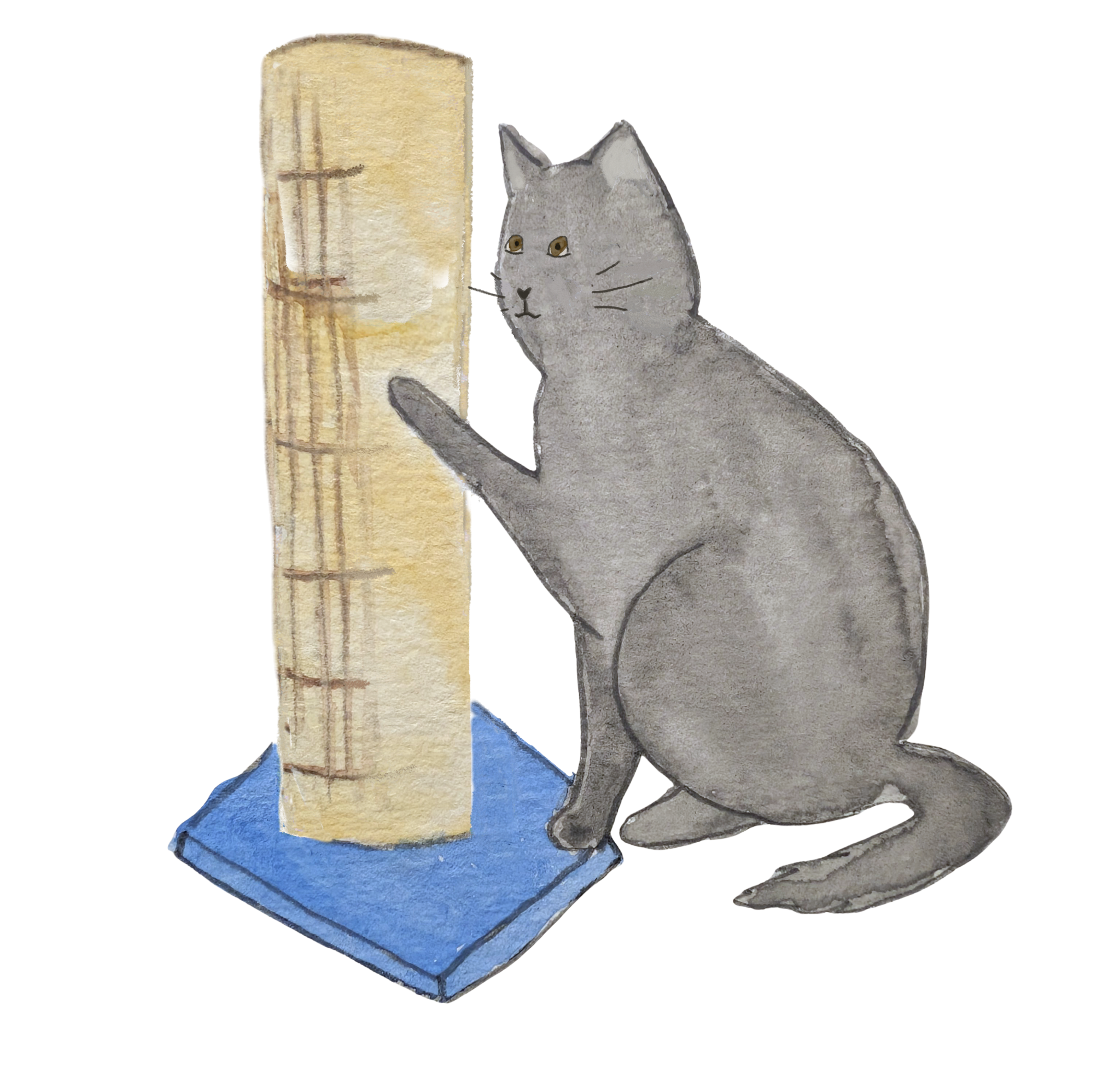
Watercolour by JSL Henning
Recently, I had the pleasure of collaborating with the team at Companion Animals New Zealand on two papers exploring what happens when an outdoor cat becomes an indoor one, and how cats (and their humans) cope with the change.
Using two different study designs, our papers revealed some unexpected insights and highlighted the many benefits (and challenges) of moving outdoor cats indoors.
See Part 1 for my write up on our first study, which followed 16 cats and their humans as they attempted to transition their cats indoors.
Part II: Guardian Experiences of Transitioning Cats from Outdoor to Indoor Living
To further investigate how transitioning a cat with previous outdoor access indoors impacts cats and their guardians, an online survey was conducted. Responses from 87 cat guardians in New Zealand were collected. Questions related to their perceptions and experiences and explored the motivations behind the move, what sort of planning people undertook to prepare, how people felt about the transition period, how cats adjusted and guardian perceptions of the benefits and challenges of transitioning outdoor cats indoors.
What motivates people to bring their cats indoors?
Cat Safety:
Over three quarters (77%) of participants said they made the transition for their cat’s health and safety. Health and safety concerns included injuries from traffic, attack or predation by other animals, infectious diseases and being stolen or deliberately harmed by other people, with some cats having already experienced an outdoor-related injury. For some guardians, the decision had been made due to threats of violence from neighbours. For others, it had been a necessary adjustment due to changes in their cat’s health.
Protecting Wildlife:
Participants could choose more than one motivation when selecting their response. 34.5% of participants said they made the decision to protect wildlife from negative cat impacts, while another 34.5% said the transition was motivated by them moving homes.
How did cats adjust?
More than 50% of cats adjusted within a matter of weeks, with 40.2% of guardians feeling their cats adjusted immediately. Only 12.6% of guardians felt their cat still hadn’t adjusted.
Cats Who Didn’t Adjust:
Of the cats that didn’t adjust, most (66%) had only been indoors for less than a year, and most (82%), had been allowed to return outside unsupervised, at least sometimes. This makes it difficult to know if these cats really did struggle to adjust, or if the behaviours their guardians perceived as evidence of stress/poor adjustment (furniture scratching, aggression, vocalisation etc.) were actually behaviours the cat had developed because they had learned they would lead to outdoor access being granted.
It is common for animals to show an increase in the intensity of certain behaviours when an established reinforcing stimulus (in this case outdoor access) is removed or no longer available. This is referred to as an ‘extinction burst’. Extinction bursts are usually temporary if the reinforcer (outdoor access) is consistently withheld. However, if the reinforcer is reintroduced, especially intermittently, it can accidentally maintain or even strengthen the unwanted behaviour because the animal learns that more of the unwanted behaviour = access to the reinforcer (outdoor access).
For example, a cat may know that when they meow or scratch at a door, their guardian will open it for them. During the transition indoors, they may try to meow or scratch to get out and when this doesn’t work, they may increase the intensity of their behaviour to try and get the result they are familiar with (being let outside). If the guardian tries to ignore it but eventually gives in and lets them outside, it teaches the cat they just need to meow and scratch more to be heard.
On the other hand, it’s possible that some, or all, of these cats have individual personality traits or life histories that mean they may struggle in an indoor environment. They may also be in homes that aren’t meeting their needs, leading to more stress inside, or there may be stressful factors within the home the cat struggles with such as small children or other animals. More research is needed on the factors that make it difficult for cats to adapt to indoor life.
Cats Who Did Adjust:
For most cats, moving indoors didn’t seem to change their behaviour. If changes were noticed, they were most commonly related to social interaction. This included behaviours that guardians perceived as positive changes (e.g., increased play) and behaviours they perceived as negative (e.g., increased meowing).
Play behaviour is considered an indicator of positive welfare in animals, including cats, and may be a good sign that cats are adjusting well. Increased play can also indicate that cats need more stimulation. Regular play sessions with a cat wand are a useful tool to keep cats stimulated. Play reduces stress, boredom and frustration, and offers important opportunities for bonding, physical exercise and stimulation.
How did humans adjust?
Most guardians felt the indoor transition was easier than they expected and over 70% said they would keep a future cat indoors. However, the transitions weren’t without their challenges.
The Challenges:
Guardians reported struggling to keep doors closed and found that having their cat indoors increased how much time and energy they had to spend on changing litter, cleaning, and interacting with their cat.
Some guardians struggled with the increased financial demands of having their cat indoors, which included spending more on litter, food, cat furniture, enrichment and cleaning. This highlights an overlooked element of the indoor/outdoor cat debate and an important consideration for councils or governments planning to make indoor cat policies; indoor only husbandry may be harder to achieve for those with limited incomes. Without adequate resources and support, policies that force cats indoors may inadvertently risk cat welfare if low-income or low socio-economic homes are unable to meet their cat’s welfare needs indoors. This may lead to cats living in sub-optimal conditions or increase relinquishments to shelters.
Guardians also struggled with changes in their cat’s behaviour, with scratching at doors, frequent vocalisations and urinating outside of the litter tray the most common cat-related complaints. Guardians also worried about their cat’s mental health and reported feeling stressed or guilty about keeping their cat indoors. Previous research has found similar links between indoor-only housing and feelings of pet-related guilt in guardians. Pet-related guilt is similar to parental guilt, and can be a significant predictor of guardian depression and anxiety, highlighting how animal management decisions also impact human wellbeing.
The Benefits:
While challenges existed, most guardians felt the transition was beneficial. Participants said it had improved their relationship with their neighbours, reduced anxiety around their cat’s whereabouts and safety, allowed them to better monitor and provide for their cat’s health, and reduced their veterinary costs.
While many guardians expressed relief at no longer having to worry about fleas or ticks, it’s important to note that preventative health care, such as check-ups, vaccinations and flea and worming are still necessary for indoor cats, especially if cats are still receiving supervised outdoor access.
Guardians also said their bond with their cat had become closer and noticed that their cat seemed more social, interacted with them more and was being more affectionate.
How did they prepare?
While 46% of participants planned the transition ahead of time, most didn’t make any specific preparations. For another 36.5% of participants, the transition was unplanned and there was no time to prepare because sudden circumstances had made the transition urgent (e.g., threats from neighbours and unexpected cat health issues). In some cases, guardians had only intended to keep their cat indoors temporarily (e.g., while healing from a surgery), but the transition had ultimately been permanent.
These findings suggest that transitioning a cat indoors is not always an issue of guardian choice. Indoor living may become necessary for numerous reasons, some of which may be sudden. This reveals a potential gap in existing resources aimed at supporting indoor transitions, which often focus on gradual adjustments over several weeks. Resources are likely needed for a range of situations, including when cats need to be moved indoors urgently.
Despite the majority of participants making no preparations, over two-thirds still felt the transition was easier than expected. This could suggest that cats adapt relatively easily, or that participant homes already met indoor cat needs.
What’s the takeaway?
Most guardians felt transitioning their cats indoors was manageable and beneficial.
Cat safety motivated most indoor transitions.
While practical challenges were the most common (doorway management, litter maintenance, increased time and energy demands), emotional challenges including feelings of guilt were also common.
Cats who were younger when they were moved indoors adjusted more quickly.
While veterinary bills were reported to reduce following transition, an overall increase in financial burden was reported, emphasising the need to consider socioeconomic factors in any future cat management interventions or policies.
Many transitions were prompted by unexpected circumstances (e.g., cat safety risk, health change) suggesting resources should also cover situations where cats need to be moved indoors suddenly.
Overall, this study adds to growing research indicating cat management impacts the welfare and wellbeing of both cat and guardian. For transitions to be successful, the needs of both the cat and their guardian should be considered and supported.
Based on: Henning, J., McDonald, N., Zobel, G., Railton, R., Waran, N., & Hazel, S. J. (2026). Owner-reported experiences of transitioning cats from outdoor to indoor living. Applied Animal Behaviour Science, 107120. https://doi.org/10.1016/j.applanim.2026.107120
